After class
Turn slide facts into a connected condition map when lecture gives the what but moves quickly past the why.
Loading…
USMLE Step 1 condition review
Use Doctogenic when class slides, Anki cards, or qbank explanations give you the fact but not enough of the reason behind it.
Supplement your study stack
Doctogenic is built to sit beside the tools students already use. Look up the condition, then connect cause, presentation, workup, treatment, and differentials in one place.
Turn slide facts into a connected condition map when lecture gives the what but moves quickly past the why.
Use a condition page when a card feels random, fragile, or hard to place in the larger mechanism.
Rebuild the reasoning behind the diagnosis, the clues that mattered, and the look-alikes that made the question hard.
Clinical path
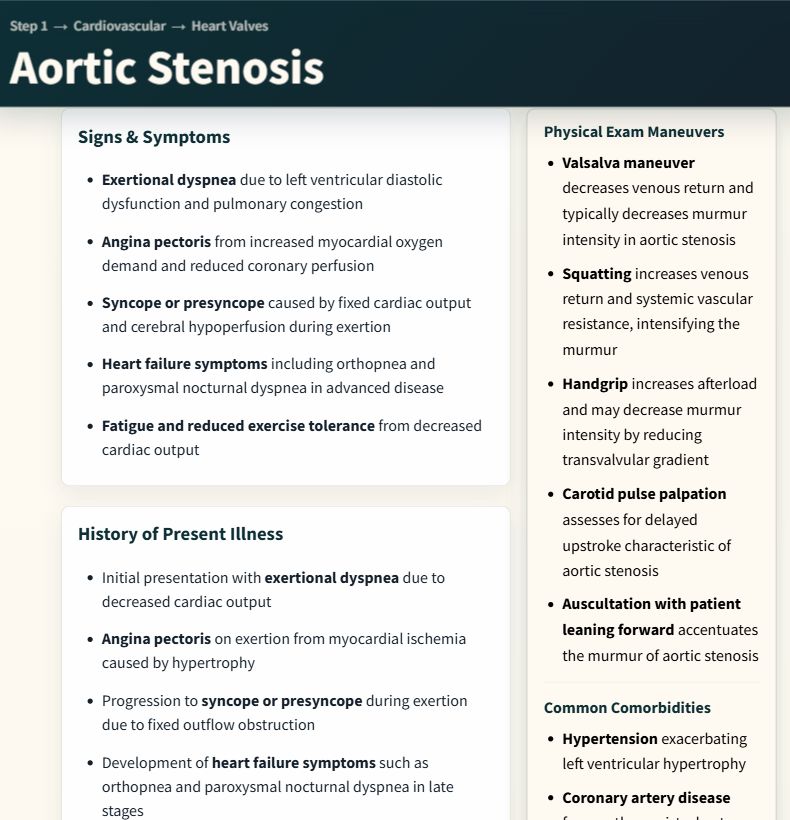
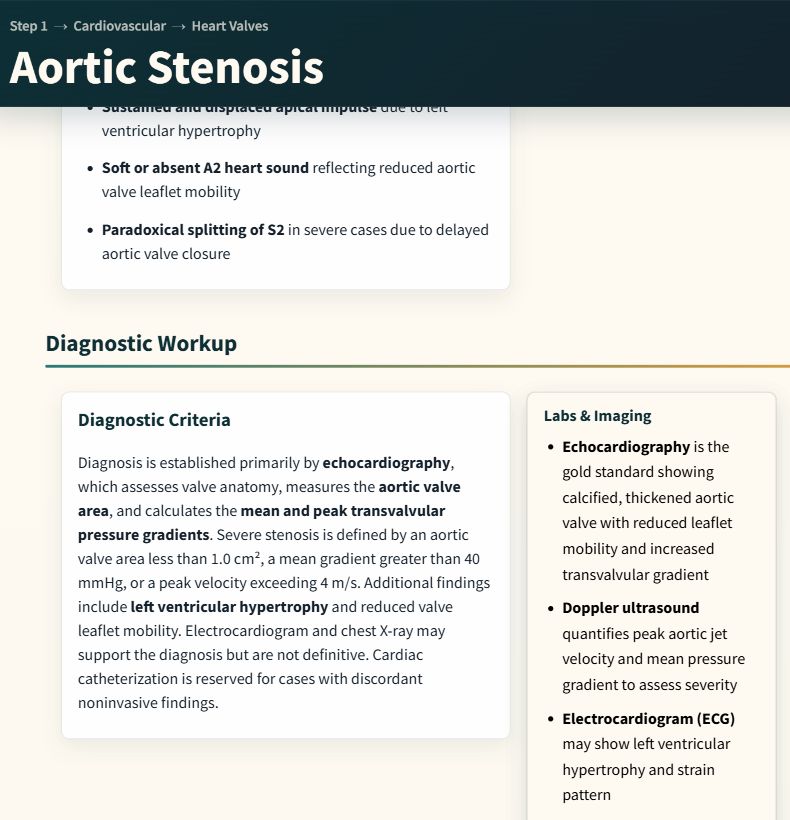
Doctogenic starts with what the condition is, then builds toward the details students are expected to recognize, test, treat, and distinguish on exams.
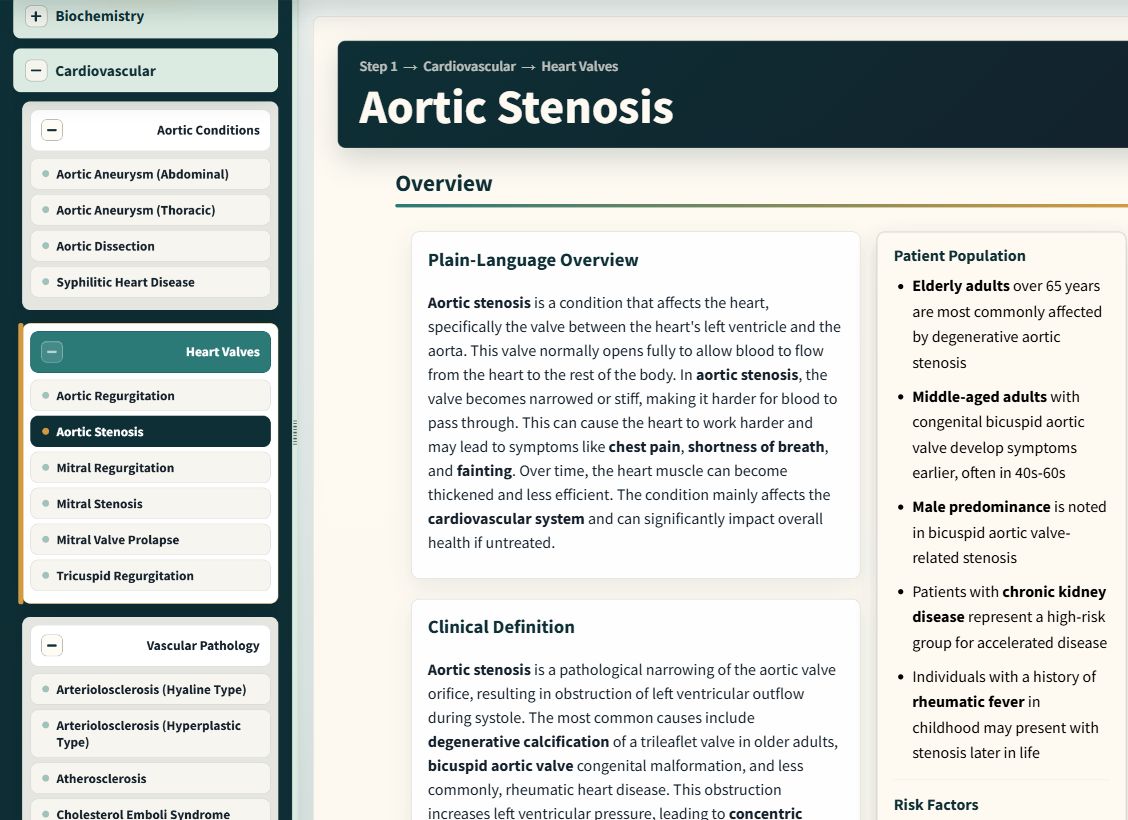
Before flashcards and qbanks
Doctogenic helps you build the clinical context first, so flashcards are easier to retain and qbank questions are easier to reason through.
Follow conditions from cause and presentation through workup, management, outcomes, and complications.
Use differentials and distinguishing findings to separate similar diseases, syndromes, and injuries.
Written for learning and board review, not patient care or general health advice.
Biochemistry and Microbiology are fully open, and paid subjects still show the plain-language overview and clinical definition before purchase.
Start without a subscription
Biochemistry and Microbiology are fully open. Paid subjects still show the plain-language overview and clinical definition, so you can preview real condition pages before choosing access.